






Availability Of Packing Materials From Movers
Moving day can feel like a puzzle where the pieces include boxes bubble wrap and a ticking clock. One of the biggest questions for homeowners and renters is whether movers will supply the packing materials that make a safe move possible. This article looks at the availability of packing materials from movers and gives clear advice so you can choose the right path for your budget and timeline.
Across different moving companies the offer for packing supplies varies. Some movers include certain items in their packages while others sell supplies a la carte or point customers to local sources. Read on for practical tips examples and a planning checklist that will help you get the materials you need without overspending or running out on moving day.
Availability Of Packing Materials From Movers Explained
Movers commonly provide a selection of packing materials but availability depends on the company and the service level. Basic items such as moving boxes and packing tape are often available for purchase through the moving company. Higher end packing services sometimes include supplies as part of the labor cost. It is important to ask about which items are supplied free of charge and which items cost extra.
When you contact a mover ask specific questions so expectations are clear. Request a list of included items, pricing for additional supplies and whether delivery of materials before packing day is possible. This reduces surprises and helps with scheduling.
Types Of Packing Materials Movers Commonly Provide
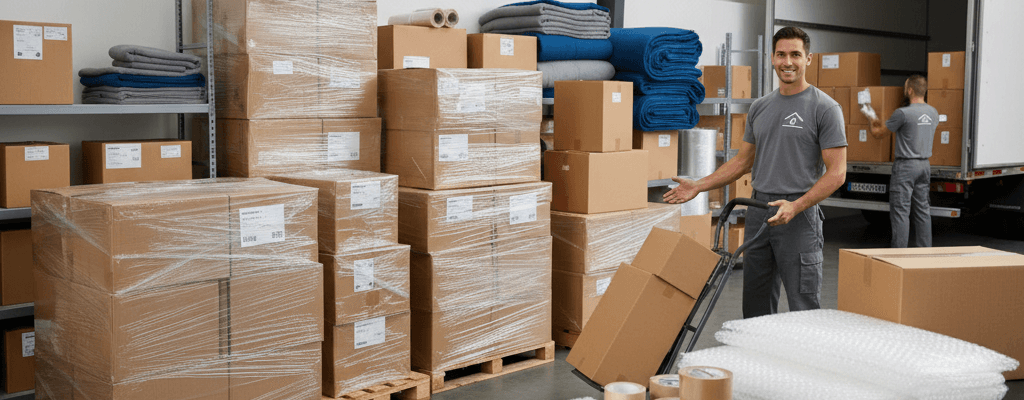
Most moving companies stock an array of materials designed to protect household goods. Here is a list of typical supplies movers offer along with practical notes on when to buy each item.
- Standard corrugated boxes These come in small medium and large sizes and are the backbone of most moves. Use small boxes for heavy items and large boxes for light bulky items.
- Dish packs and wardrobe boxes Dish packs have thicker walls to protect plates and glassware. Wardrobe boxes include a hanging bar so clothes stay on hangers.
- Bubble wrap and packing paper Bubble wrap protects fragile surfaces while paper fills gaps and prevents items from shifting.
- Mattress bags and furniture blankets These guards prevent stains and scratches on upholstered items and flat mattresses.
- Packing tape and dispensers Good quality tape makes sealing boxes quick and reliable.
- Specialty crates For antiques large mirrors and artwork crate services may be offered for an added fee.
Standard Boxes And Wardrobe Boxes
Standard boxes are rated by weight capacity. Movers can often recommend the best mix for your inventory. Wardrobe boxes reduce the need to fold clothes and shorten the time needed for setup after moving. If you have many hanging garments ask for extra wardrobe boxes or consider portable garment racks.
Fragile Packing Supplies
For china glass and electronics choose materials that provide cushioning and stability. In many cases movers offer pre cut foam inserts or reinforced dish boxes. For valuable items consider asking about white glove options where packing is handled by trained staff with high density protective materials.
How Pricing Works For Packing Supplies From Movers
Understanding pricing helps prevent unexpected charges. Movers price materials using several common models. Some include basic boxes with moving packages while premium supplies are extra. Others sell every item individually. A few companies allow rental of specialty crates which can be cost effective for certain moves.
- Per item pricing, pay per box or roll of tape
- Supply packages, bundled sets for different sized homes
- Included with packing service, supplies covered when movers do the packing
- Rental crates, temporary wooden or plastic crates returned after delivery
To compare prices ask for a line item list in your estimate. This lets you compare the cost of buying from the mover versus sourcing boxes from a home improvement store or online marketplace. Keep in mind that convenience sometimes has a price premium.
Pros And Cons Of Buying From Your Mover Versus Retail Options
There are trade offs when deciding where to buy packing supplies. Below are several pros and cons to weigh for the mover supplied option and for buying on your own.
- Buying from the mover benefits Convenience of same day delivery and matched sizes that movers expect for loading. Some movers also guarantee the quality which can save time on replacements.
- Buying from the mover drawbacks Higher unit price compared to big box stores and limited eco friendly choices in some cases.
- Retail advantages Often lower cost per box and a wider selection of recycled or specialty items. Retail sources work well for DIY packing when time allows.
- Retail disadvantages You must transport materials to your home and there can be a mismatch with the mover s preferred sizes which affects stacking and loading efficiency.
How To Order Packing Materials Through Movers
Ordering from a mover can be simple when you follow a short process. First request a quote that lists items and costs. Next set a delivery date for materials so packing can begin ahead of the moving crew arrival. Finally confirm pickup or return procedures for any rental items.
When you contact local movers request delivery five to seven days before the move for a typical household. This gives time to pack room by room and to handle fragile items with care.
As an example you might place an order for 20 small boxes 10 medium boxes 5 large boxes 2 wardrobe boxes and a roll of packing tape. If you prefer full packing service the mover may provide all necessary materials on the packing day. A local provider can also advise on specialty crates if needed. For a recommended local option visit Mountain Movers to view typical supply lists and order options.
Tips For Getting The Right Quantity And Quality Of Supplies
Estimating the number of boxes is a common challenge. Use these rules of thumb and strategies for better planning.
- Room based estimates Small rooms often need 15 to 25 boxes, one bedroom 20 to 40 boxes depending on closet and storage contents, kitchens may need 30 to 50 boxes because of dishes and appliances.
- Weight management Pack heavy items in small boxes to keep boxes manageable and to prevent collapse during loading.
- Labeling and color codes Label each box with contents and final room. Use colored stickers for priority items you need on day one.
- Order extra supplies Buy a small buffer of 10 to 15 percent more boxes than your estimate to avoid last minute runs.
When assessing quality look for double wall construction for heavier items and reinforced bottoms. Request a sample box or examine photos from the mover if you cannot inspect materials in person.
Sustainable Options And Alternatives To Mover Supplied Materials
Sustainability matters to many movers and clients. If you want green alternatives consider used boxes rental crates and biodegradable packing paper. Local stores and online marketplaces often have boxes in good condition at a fraction of new prices.
Another option is a crate rental program which uses stackable plastic crates that eliminate cardboard waste. Some moving companies manage the delivery pickup and sanitization of these crates so the process is seamless. If you go this route make sure the mover schedules the pickup so you do not end up storing empty crates at your new address.
Reusing And Repurposing Materials
Reusing boxes from previous purchases and from neighbors cuts cost and waste. When reusing boxes check for water damage and reinforce the bottom with tape. Newspaper and towels can substitute for packing paper in a pinch.
Where To Donate Or Recycle Used Moving Supplies
After the move donate usable boxes to community centers thrift stores or online freecycle groups. Flattened cartons can be recycled through curbside programs in many areas. Some moving companies also accept returns of clean reusable boxes for a small refund.
Finding the right packing materials for your move takes planning research and clear communication with your mover. This article has outlined what movers typically supply how pricing works and where to look for sustainable alternatives. Use the room based estimates and labeling tips to plan orders so packing happens on schedule.
Next steps include requesting a detailed supply list in writing comparing per item costs with retail pricing and ordering materials early. If you prefer that professionals handle packing ask for a quote that bundles labor and supplies. A little preparation goes a long way toward a safer faster move. Reach out to your chosen moving provider several weeks before moving day so delivery and pickup dates are locked in and the process goes smoothly.